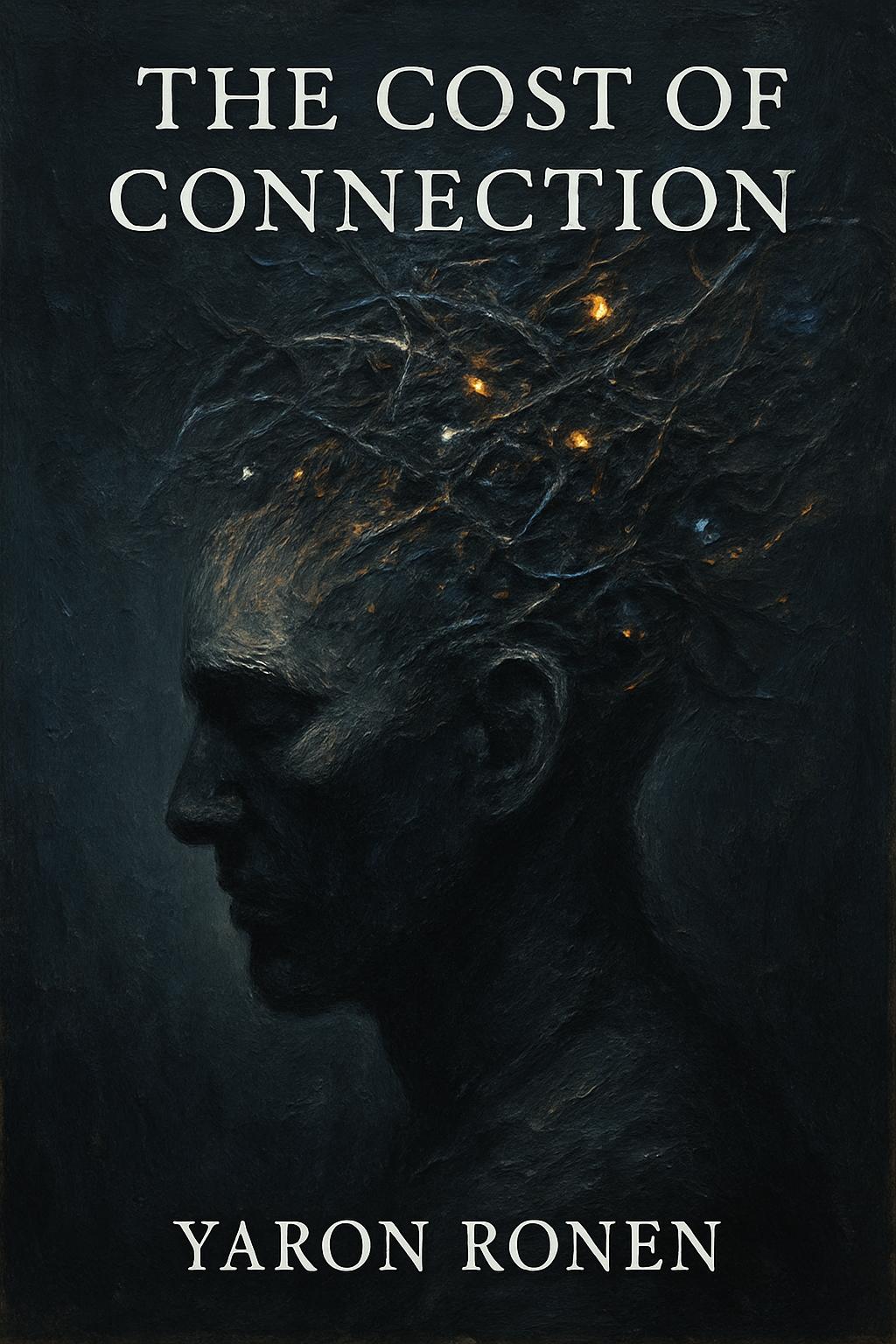
Most of us sense it but struggle to name it—the creeping mental exhaustion that sets in not from using AI too little but from engaging with it too much. This book confronts an emerging and vastly underdiagnosed crisis: AI fatigue, the diffuse but deepening weariness produced by tools that promise to lighten our cognitive load yet leave us drained, distracted, and disoriented. Drawing on an extensive synthesis of cognitive science, workplace surveys, industry research, and cultural commentary, the investigation dissects how constant exposure to generative AI rewires attention, erodes independent judgment, and seeds a profound distrust in information itself. The book unearths a hidden taxonomy of fatigue types—from the fog of “brain fry” and the churn of relentless tool switching to the alienation of “slop fatigue” and the vertigo of existential doubt—each with distinct causes and compounding effects that current debates about AI have failed to address.
The central thesis is that AI fatigue is not a temporary byproduct of adoption but a structural feature of a world built around opaque, probabilistic systems that offload creative effort while multiplying verification burdens. Through a methodical examination of landmark studies—including MIT’s research on “cognitive debt,” BCG’s findings on diminished performance under AI reliance, and Microsoft and Carnegie Mellon’s evidence of atrophying critical thinking—the book reveals the asymmetry between how easily AI generates content and how heavily humans must work to audit it. It surfaces the “mandate-without-mastery” gap inside organizations that demand AI usage without providing fluency, tracks the emergence of a two-tier society split between those who can opt out of constant automation and those who cannot, and maps the geographic divergence in trust and fatigue across regulatory and cultural boundaries. Along the way, the book interrogates vendor-funded claims, flags unverified statistics, and names the biases—Western-centric and otherwise—that have warped our understanding of the phenomenon.
Readers will emerge with an operational vocabulary for a condition that until now has been felt but not defined, along with a clear-eyed framework for recognizing where fatigue originates, how it is exploited, and when it signals genuine risk rather than mere resistance. By layering interviews, anchor anecdotes, and counterarguments, the book equips knowledge workers, leaders, and policymakers to move beyond both boosterism and panic, toward strategies that preserve human agency inside increasingly automated environments. Ultimately, the work challenges the assumption that efficiency is the only metric of successful adoption, arguing instead that the true cost of AI integration will be measured in cognitive resilience, critical capacity, and the trust we can still place in what we see.
Chapters
7 chapters1
The Review Tax
May 24, 2026
2
The Neural Toll
May 26, 2026
3
The Mandate-Without-Mastery Gap
May 27, 2026
4
The Extraction of Craft: Captured Capital and Existential Fatigue
May 28, 2026
5
The Synthesized Web and the Degradation of Shared Reality
May 29, 2026
6
The Intimacy Trap: Synthetic Companions and the Automation of the Heart
May 30, 2026
7
The Sovereign Mind: Reclaiming Agency, Attention, and Trust in the Automated Age
May 31, 2026
Similar Stories
You might also enjoy these
This book and its contents are © 2026 by Yaron Ronen. All rights reserved.